



The first question in fuel oil metering is what you are measuring: fuel burned by a boiler, engine or power plant (consumption), or product entering or leaving the site (transfer). For consumption, fuel is often supplied through a circulation loop, and consumption is calculated as the difference between readings on the supply and return lines. For transfer, product passes one way through a single meter and the quantity may be used for invoicing. Even when both tasks use the same meter technology, their error sources, verification approach and skid layout differ.
How high viscosity affects meter selection is covered on the heavy oil metering skid page, and on-skid heating on the heated metering skid page. Here the focus is the distinction between consumption and transfer, how net consumption is obtained in supply-and-return systems, and filtration.
Consumption versus transfer: two different jobs
Topic | Consumption metering (boiler, engine, power plant supply) | Transfer metering (receipt, delivery) |
Purpose | Efficiency monitoring, fuel cost allocation, emissions and energy reporting | Invoicing, inventory reconciliation, the quantity agreed between supplier and buyer |
Typical layout | One meter on the supply line and one on the return; consumption is the difference | A single meter in one-way flow, with proving connections where needed |
Dominant error sources | Return-to-consumption ratio, temperature difference between lines, pulsation and backflow, air in the return line | Meter performance, temperature and density correction, gas elimination |
Quantity basis | Mostly mass, or a quantity convertible to energy | Reference volume or mass, as the contract specifies |
Regulatory context | Usually internal; where reporting obligations apply, the relevant monitoring rules govern | Whether legal metrology applies depends on national legislation |
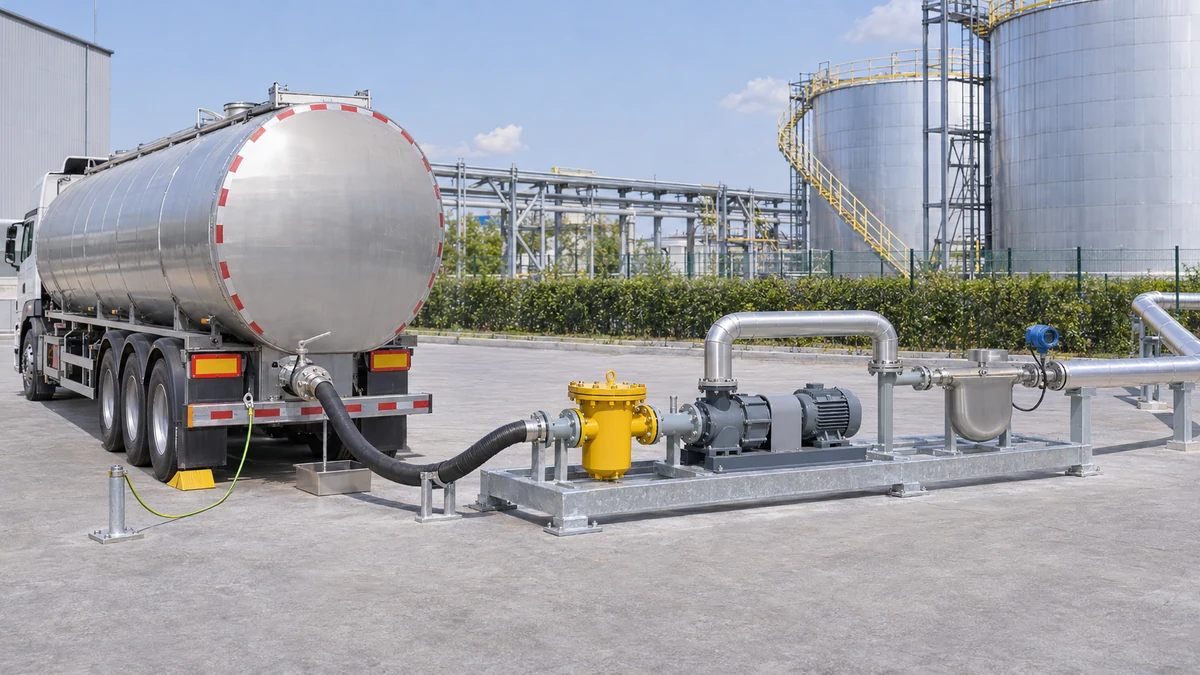
Finding net consumption in a circulating fuel system
Many engines, generators and boilers running on diesel or heavy oil receive fuel at a flow well above what they burn, with the surplus coming back through a return line. According to a technical paper from a meter manufacturer, circulation flow is usually about three to four times actual consumption. Consumption is then found by subtracting the return meter reading from the supply meter reading, an approach known as differential measurement.
The core difficulty is that the errors of two meters are set against a small difference. In a worked example from the same paper, two meters of 0.5 % accuracy with 6 000 l/h supply and 4 000 l/h return give an error of about 2.5 % on consumption; when the return rises to 5 400 l/h, meaning lower consumption, the error climbs to about 9.5 %. With 0.1 % meters, the same cases come out at about 0.5 % and 1.9 %. The figures are illustrative only, but they show clearly why meter choice matters for a boiler or engine running at low load.
Further error sources in differential measurement
· Supply–return temperature difference: Fuel warms up at the consumer before it returns; with volumetric meters, uncorrected density differences between the lines distort consumption. The same paper notes that differences of up to 10 °C can occur even on traced lines. Mass measurement, or separate temperature correction on each line, removes the effect.
· Pulsation and backflow: Injection pumps, valves and uneven pumps create pressure surges and brief reverse flow. Meters that register both flow directions, and a skid placed sensibly relative to pulsation sources, both help.
· Pipe vibration: Vibration from engines and pumps can affect meters that measure through their own oscillation; skid supports and meter position are planned accordingly.
· Air in the return line: In some systems air bubbles from the engine enter the return line; an air separator and correct meter position are needed.
One application report from a power station describes a supply and a return meter on each boiler, used both to evaluate efficiency and to detect leaks by cross-checking the two readings. It illustrates that differential measurement can tell you about the health of the fuel system, not just how much was burned.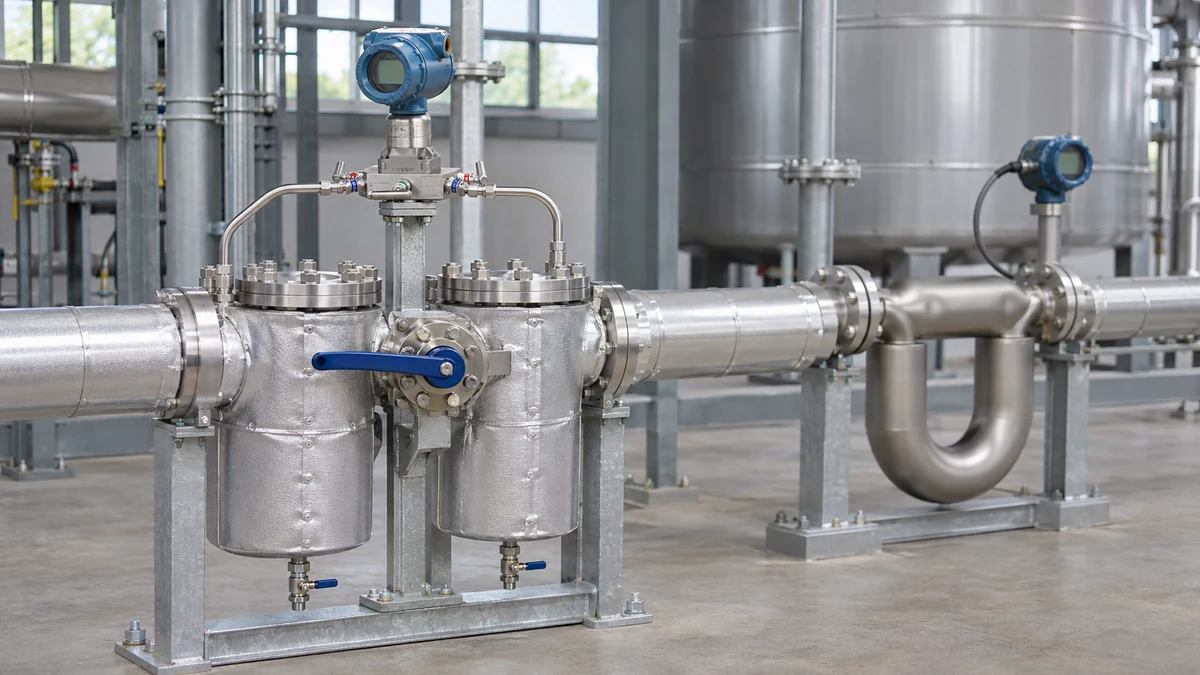
Mass or volume?
For fuel oil used hot, volume changes noticeably with temperature. Since efficiency and heat-rate calculations are usually made on a mass basis, consumption metering favors meters that deliver mass directly, or volumetric measurement backed by reliable temperature and density correction. For transfer metering, the contract sets the basis, which may be volume at reference temperature or mass. Coriolis meters measure mass, density and temperature simultaneously; positive displacement meters measure volume directly and need separate temperature and density data for conversion.
Filtration: protecting the meter and the burner
ISO 8217, the marine fuel specification, defines fuel as delivered before onboard settling, centrifuging, filtration and heating, which signals that cleaning residual fuel before use is a normal step. Onshore, a fuel oil metering skid likewise has a strainer upstream of the meter. Positive displacement meters need strainer protection against solids; with Coriolis meters the strainer mainly protects downstream equipment.
Because consumption lines cannot be interrupted, duplex (switchable) strainers or a bypass arrangement, differential pressure monitoring across the strainer, and heating and insulating the strainer body like the line are all part of the design. A cold strainer body can cause a pressure drop rise in viscous fuel that looks like rapid clogging.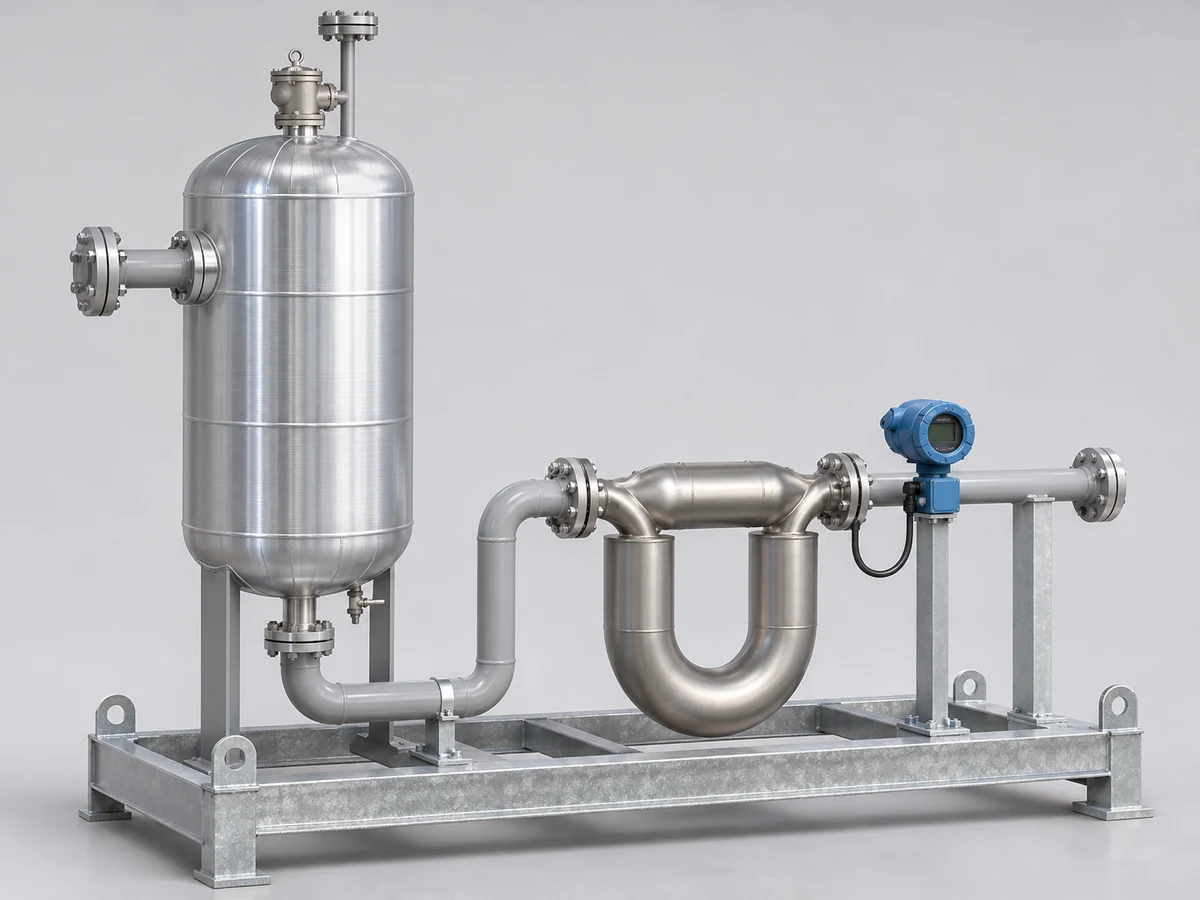
A short note on transfer metering
Receiving fuel oil by truck or pipeline, or measuring product leaving the site, is a single-meter measuring system. The meter technology is chosen for the viscosity range, temperature and density correction and gas elimination are provided, and for commercial use a verification method is planned. OIML R 117 treats measuring systems above 1 000 mPa·s in wider accuracy classes; which requirements apply depends on national legislation. Grade changes and records for truck loading are covered on the fuel oil truck loading page.
Where TLY Energy contributes
For fuel oil consumption and transfer metering, TLY Energy provides engineering support in choosing a suitable meter technology, supplying meters and instruments, installation and commissioning, and bringing measurement data into PLC or SCADA systems for reporting. The interface with the burner, engine or boiler supplier and the scope of supply are agreed at project start.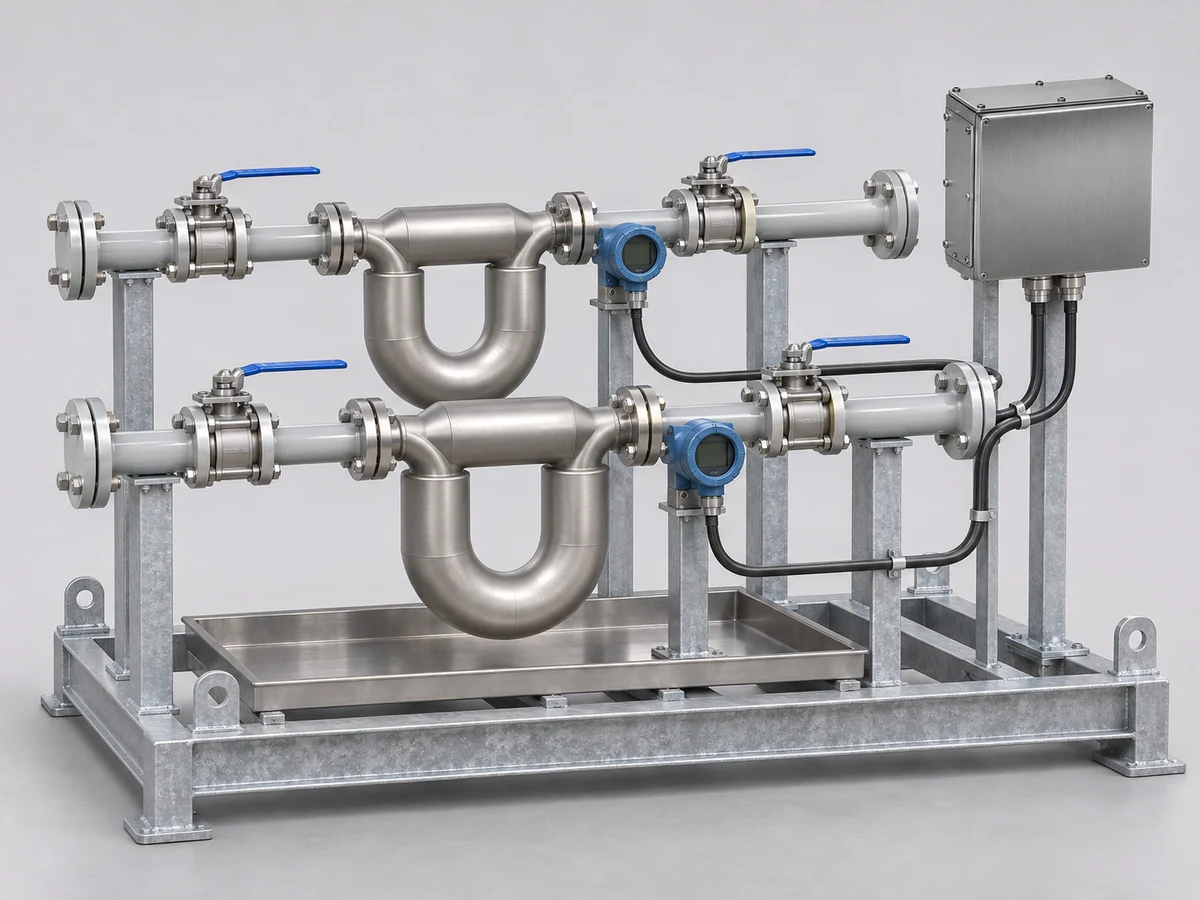
Information we need for an assessment
· Purpose of measurement: consumption, transfer, or both
· Number of consumers and the load range of each, including low-load consumption
· Circulation flow, supply and return temperatures
· Fuel grades with viscosity and density data
· Existing fuel system diagram, pump types and sources of pressure pulsation
· Required output (mass, reference volume or energy) and the reporting system
Related pages
· Heavy oil metering skids: How viscosity shapes meter technology and pressure drop.
· Heated metering skids: Avoiding cold spots on meters and strainers.
· Fuel oil truck loading systems: Loading multiple grades, changeovers and records.
· Heat tracing systems: Holding temperature on supply and return lines.
· Custody transfer truck loading skids: Verification and records for liquid sales metering.
Fuel oil metering FAQ
Can the fuel oil consumption of an engine or boiler be measured with one meter?
If fuel goes straight to the consumer without circulation, one meter is enough. In circulating systems with a return line, either two meters are used on supply and return, or the fuel system is arranged so the return rejoins the supply downstream of the meter, allowing consumption to be measured with a single meter. Whether the second option is feasible depends on the fuel system design and the equipment maker's requirements.
Why can the error in differential measurement grow so large?
Because two large flows are measured and the small difference between them is calculated. Each meter's absolute error may be small relative to its own flow, but when the two are added and set against a small consumption value, the percentage becomes large. The larger the return flow relative to consumption, in other words the lower the load, the stronger this effect.
How should the supply–return temperature difference be handled?
Meters that measure mass are not directly affected by the density difference. With volumetric meters, each line's temperature must be measured separately and density corrected. Heat tracing reduces the temperature difference but does not eliminate it, because the fuel warms up at the consumer, so correction is still required.
What kind of strainer should sit ahead of a fuel oil meter?
Mesh size follows the meter manufacturer's recommendation and the needs of downstream equipment. On consumption lines, where supply cannot be interrupted, a duplex or bypassed arrangement with differential pressure monitoring is advisable. Heating and insulating the strainer body also prevents what looks like clogging in viscous fuel.