



When metering heavy oil, the first input that shapes the choice of meter is not a single viscosity figure but the viscosity range the meter will see in service. Heavy oil viscosity moves sharply with temperature, so a few degrees of drift in the line change the meter's pressure drop, its internal slippage or its position on the calibration curve. Selection therefore weighs viscosity at the lowest and highest operating temperatures, the pressure drop the pump can afford, and whether the quantity is needed as mass or volume. Positive displacement and Coriolis meters are the two options most often compared.
The general make-up of a liquid metering skid, with strainer, air eliminator, meter, temperature and pressure measurement, control valve and proving connections, is described on the custody transfer loading skid page. This page looks only at how high viscosity drives technology choice, pressure drop and temperature correction.
Why viscosity should be specified as a range
For petroleum products, viscosity falls steeply as temperature rises. ASTM D341 provides equations and charts for estimating kinematic viscosity at other temperatures, within a limited range, from values known at two temperatures. The practical consequence for a metering skid: with product data at two temperatures, the designer can build the viscosity envelope the meter will face across the lower and upper line temperatures. A meter chosen for one nominal viscosity may end up far outside its design range during a cold start or a heating failure.
Three conditions are worth checking separately: normal operation, start-up with heating only partly established, and restart after a shutdown. The temperature at which heavy oil stays pumpable and the temperature at which it is best metered are different questions; both come from product data and from the viscosity limits of the equipment.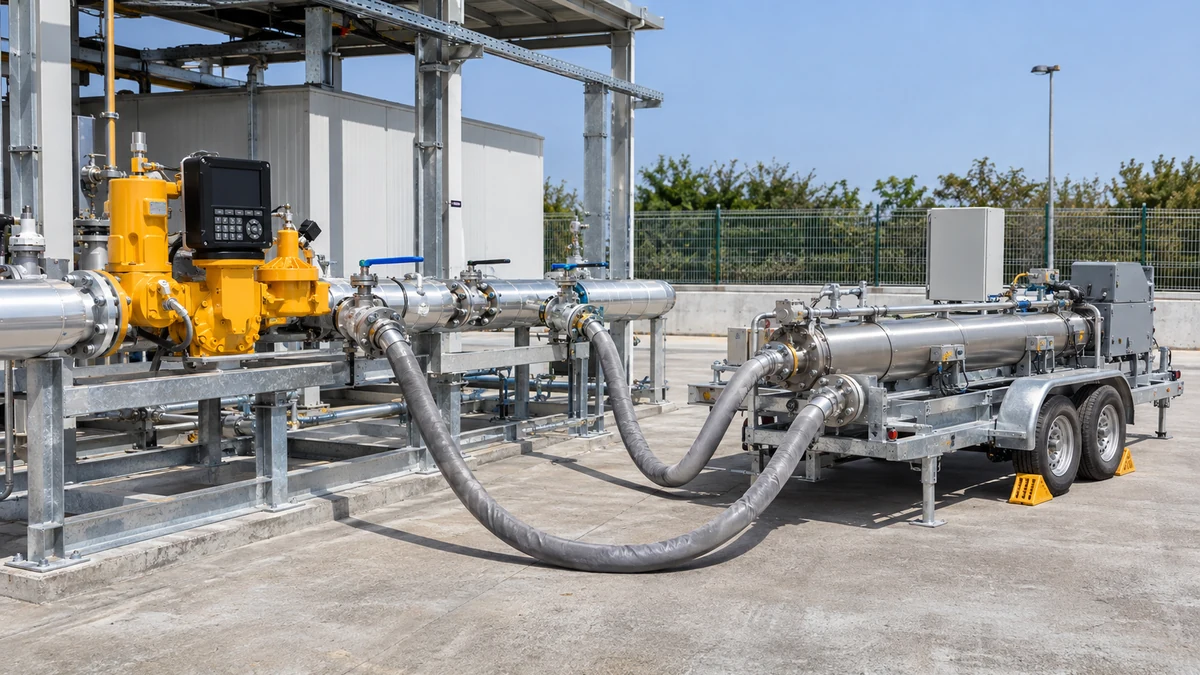
Meter technologies through the lens of viscosity
Main effects of rising viscosity on meter technologies (general, qualitative)
Technology | What happens as viscosity rises | What to watch with heavy oil |
Positive displacement meter | Slippage around the measuring chamber decreases, while pressure drop across the meter increases | High pressure drop can wear bearings and seals; calibrate close to operating viscosity and protect the meter with a strainer |
Coriolis mass flow meter | Pressure drop through the flow tubes increases, notably with bent-tube designs | Mass, density and temperature are measured directly; at low flow, accuracy depends on zero stability, so meter size balances pressure drop against low-flow performance |
Turbine meter | The calibration curve becomes dependent on kinematic viscosity and Reynolds number | Viscosity shifts with temperature move the meter factor; deposits can affect the rotor, so turbines are usually a secondary choice for heavy oil |
These are general tendencies. Whether a particular meter suits a given heavy oil is confirmed with manufacturer data, pressure drop curves and, where possible, calibration results at a viscosity close to the product. One manufacturer application report describes a power station fuel oil supply where turbine meters needed regular servicing because of deposits on the blades and were replaced with straight-tube Coriolis meters calibrated at three temperatures. That is a single-site account and should not be read as a general rule.
Pressure drop: size the meter together with the pump
On heavy oil skids, the pressure drop budget often sets meter size more firmly than the accuracy target does. Losses across meter, strainer and control valve climb quickly at high viscosity; if they exceed what the pump can deliver, flow falls or the pump has to be upsized. A larger meter lowers pressure drop but also lowers velocity at a given flow, weakening performance at the bottom of the range. The balance is struck by checking pressure drop at the lowest temperature and highest flow, and metering performance at the highest temperature and lowest flow. Pump type and line sizing for viscous service are covered on the viscous product transfer page.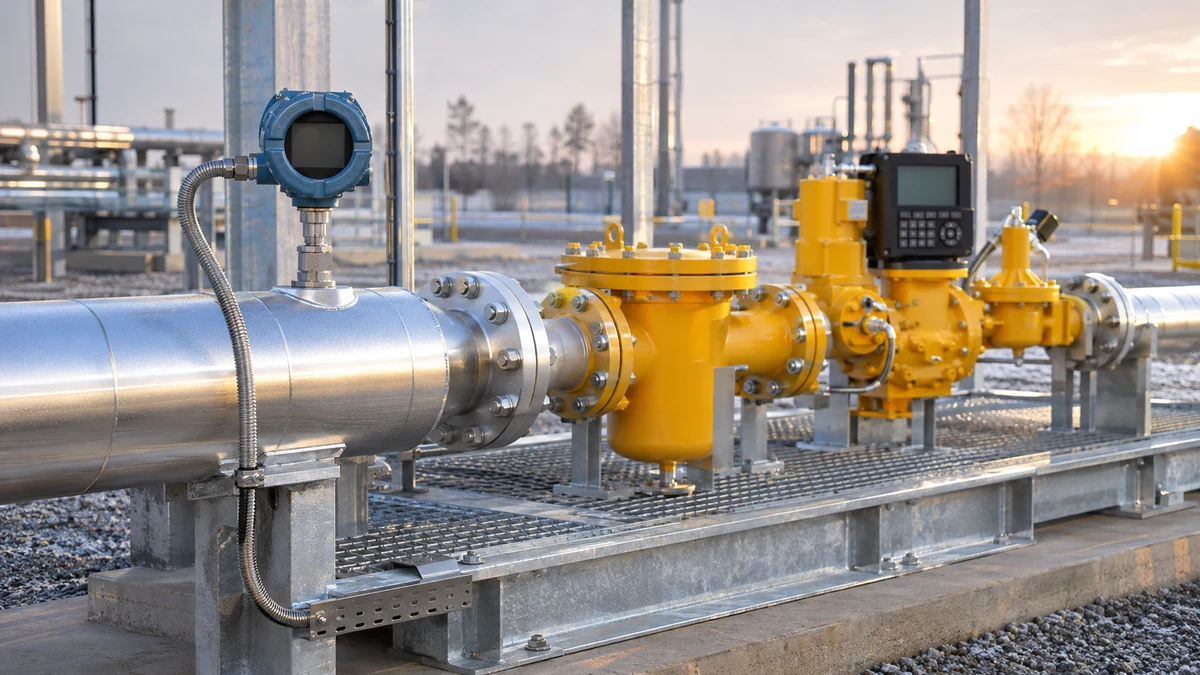
Temperature measurement and correction
Temperature measurement on a heavy oil skid does two jobs. The first is converting volume at metering conditions to a reference temperature; OIML R 117 defines a conversion device as the element that uses temperature, pressure, density and similar quantities to convert volume at metering conditions into volume at base conditions or into mass. The second, for meters that need viscosity-dependent correction, is to provide the input for estimating current viscosity. Both require the sensor to sit close to the meter where it truly represents product temperature; a sensor near a heater surface or in a stagnant pocket gives a misleading reading.
Because a Coriolis meter also measures temperature and density, mass-based metering needs no separate volume correction, and volume, if required, is calculated from mass and density. With a positive displacement meter, temperature measurement combined with density or product tables is an essential part of reaching reference volume. The API Manual of Petroleum Measurement Standards addresses electronic measurement with PD and turbine meters using on-line temperature and pressure compensation, and the use of Coriolis meters for liquid hydrocarbons, in separate chapters.
Proving at operating viscosity
Calibrating a heavy oil meter on a low-viscosity liquid and then running it on a far more viscous product can introduce systematic error. If the meter is to be proved on site with a prover or master meter, proving at operating temperature, and therefore operating viscosity, is preferred. Separate meter factors may be needed for different grades or temperature bands. Proving connections must be heated and insulated like the rest of the skid, or the product cools during the proving run.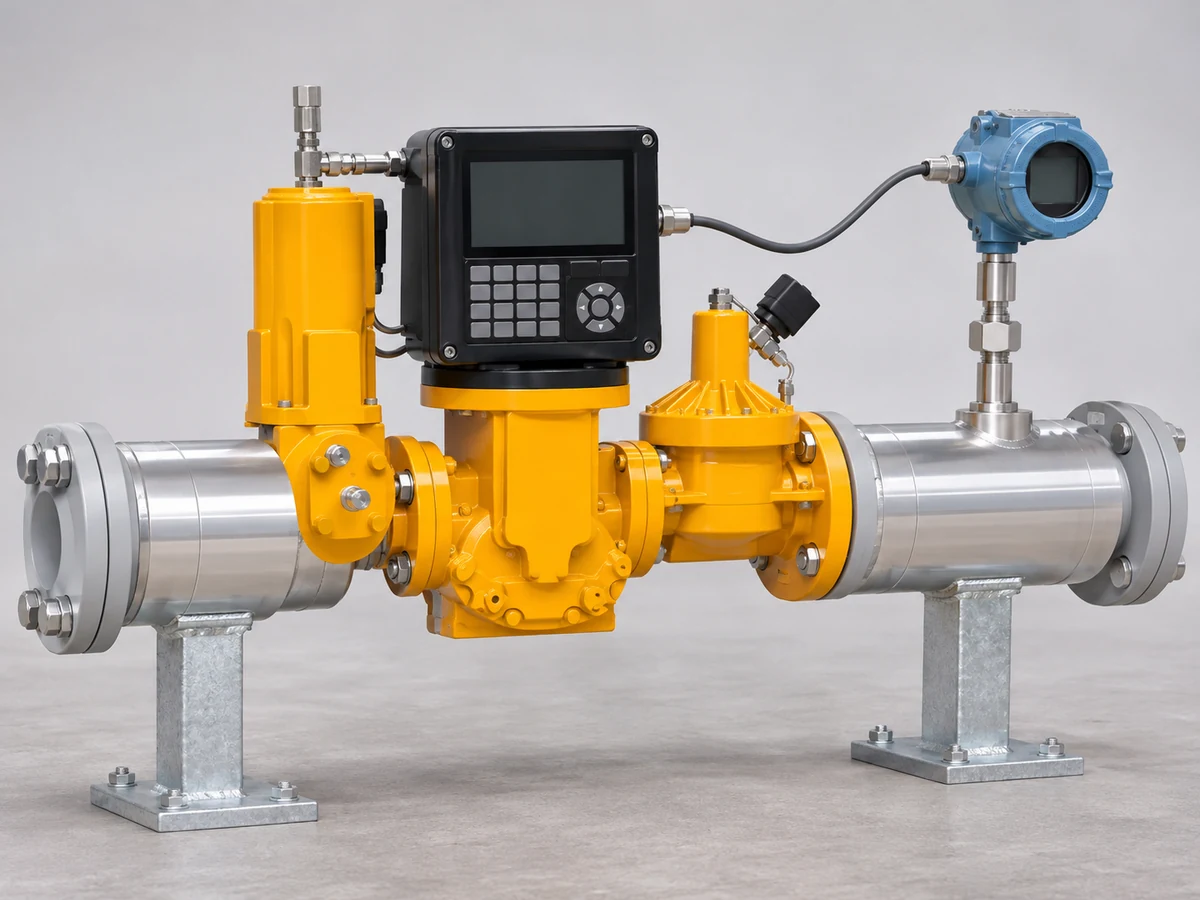
Process metering versus commercial metering
A heavy oil skid for in-plant transfer or inventory monitoring and one used as the basis for sales can share the same hardware; they differ in proving frequency, recording and sealing arrangements, and how system uncertainty is demonstrated. OIML R 117 assesses measuring systems for liquids above 1 000 mPa·s in wider accuracy classes and sets a tighter error limit for the meter than for the complete system. A good meter on its own does not prove the performance of the whole skid.
Where TLY Energy contributes
TLY Energy supports heavy oil metering projects with engineering: analyzing process conditions to select a suitable measurement technology, supplying Coriolis and other flow meters, installing and commissioning flow meters, and bringing measurement data into PLC or SCADA systems. Scope of supply, including interfaces with heating, insulation and pumping, is settled at the start of each project.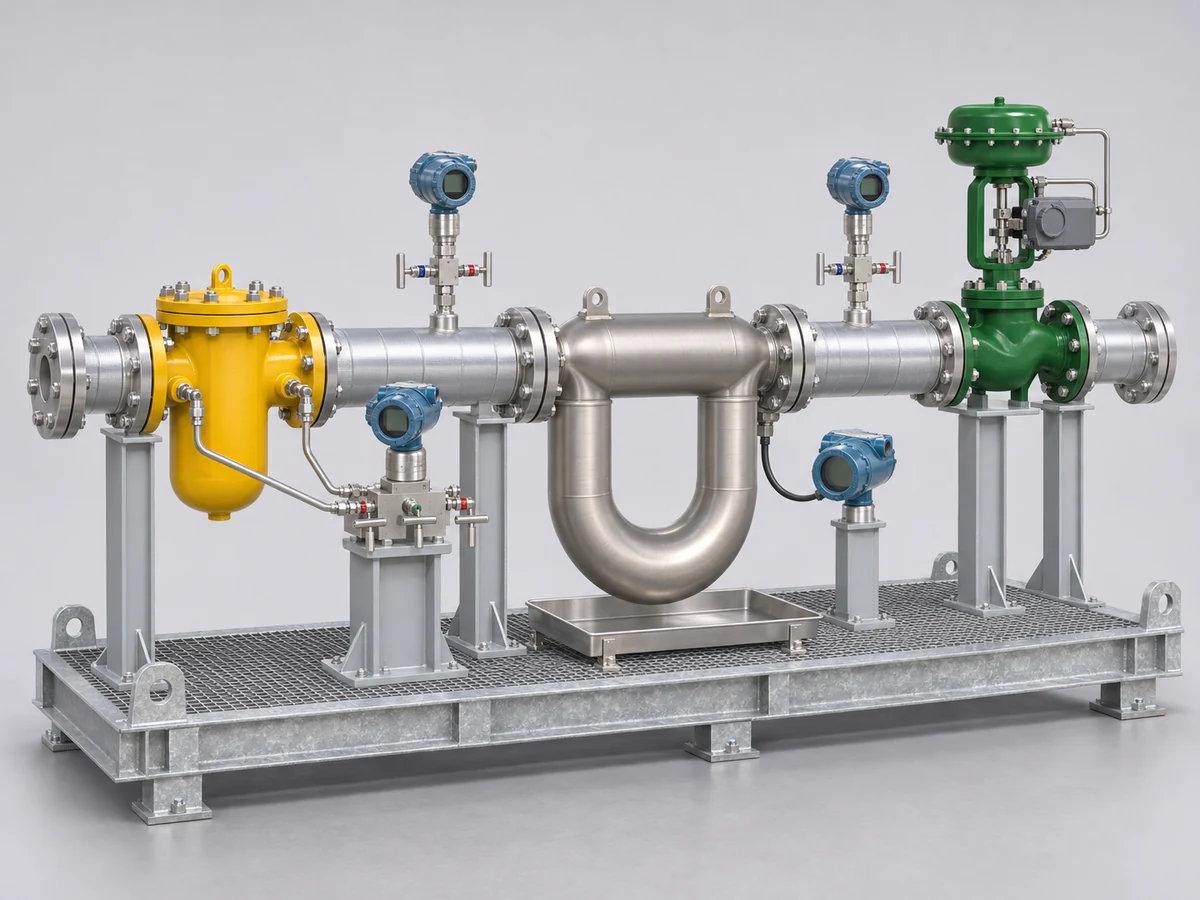
Data needed to select a heavy oil meter
· Kinematic viscosity and density at two or more temperatures, plus pour point if available
· Lowest and highest product temperature expected at the skid inlet, and the cold-start case
· Minimum, normal and maximum flow rate
· Pressure drop the pump can allocate to the skid
· Whether the quantity is needed as mass, line volume or reference volume
· Information on solids, water and gas content
· Process or commercial purpose, and the expected proving method
Related pages
· Heated metering skids: Heating meters, strainers and valves on the skid without cold spots.
· Fuel oil metering skids: Consumption metering for boilers, engines and power plant supply.
· Viscous product transfer systems: Pump and line sizing for viscous service.
· Custody transfer truck loading skids: General components of a liquid metering skid and the proving approach.
· Bitumen metering skids: Metering viscous products handled at even higher temperatures.
Heavy oil metering FAQ
Should I choose a positive displacement or a Coriolis meter for heavy oil?
There is no universal answer. In a PD meter, slippage falls as viscosity rises, but pressure drop and mechanical load increase. A Coriolis meter gives mass and density directly and has no moving parts, yet at high viscosity its pressure drop, and at low flow its zero stability, become decisive. The choice comes from the viscosity envelope, the pressure drop budget and the quantity basis considered together.
Does a meter need recalibrating when viscosity changes?
For viscosity-sensitive meters, measurement can drift if operating viscosity moves well away from calibration viscosity. Proving at operating conditions, and if necessary using separate meter factors for each grade or temperature band, is then advisable. The most practical way to keep viscosity steady is to control skid temperature within a narrow band.
Where should the temperature sensor go on a heavy oil skid?
Close to the meter, in flowing product, at a point that represents true product temperature. A sensor too near a heating jacket or trace cable, or sitting in a stagnant pocket, can end up reading the heater rather than the oil. That error then carries into both volume correction and viscosity estimation.
Why does pressure drop matter so much on heavy oil skids?
At high viscosity, losses in the meter, strainer and valves are far larger than with light products and rise quickly as temperature falls. If total losses exceed what the pump can deliver, flow drops or a larger pump is needed. Meter size is therefore chosen after checking pressure drop in the coldest operating case.
Can a turbine meter be used on heavy oil?
It can, but a turbine meter's calibration curve depends on kinematic viscosity and Reynolds number, so the meter factor shifts as temperature changes viscosity. Deposits on the rotor can also raise maintenance needs. PD or Coriolis meters are therefore usually evaluated first, with a turbine meter considered only where viscosity can be held within a narrow range.