



The way to handle variable product properties when loading pyrolysis oil into trucks is to stop designing for a "typical" oil and start designing from the product's own lab data. Oils made from tires, plastics or biomass differ widely, and even successive batches from one plant can shift in viscosity, water, solids and acidity. Straining, heating, materials and vapor control on the loading line are therefore sized from representative samples drawn from the storage tank, and from how those results change over time.
The general loading chain of pump, meter, control valve and loading arm is covered on the truck loading systems page. What follows concentrates on where that chain needs a different approach when the product is pyrolysis oil.
Product data the loading design depends on
Published data for biomass fast pyrolysis oil give a sense of scale. According to IEA Bioenergy, these oils typically contain 20–30 wt% water, have a pH of 2–3 and a viscosity of roughly 15–35 cSt at 40 °C. Those figures apply to biomass-derived fast pyrolysis oil only. Tire and plastic pyrolysis oils have a different composition and fall outside the product specifications written for biomass oil, so any design value for them has to come from analysis of the actual product.
· Viscosity versus temperature: Measured across the temperature range expected at the loading point, not at a single value; it drives pump selection, line size and heating needs.
· Water content and phase behavior: Whether the oil stays single-phase or tends to separate while standing.
· Solids and sediment: Tendency to form sludge at the tank bottom; the basis for strainer and filter selection.
· Acidity: pH or total acid number, which governs wetted-part and seal materials.
· Flash point and volatiles: Inputs to hazardous area classification, vapor collection and odor control.
· Aging behavior: How much viscosity rises with storage time, important when loading from older stock.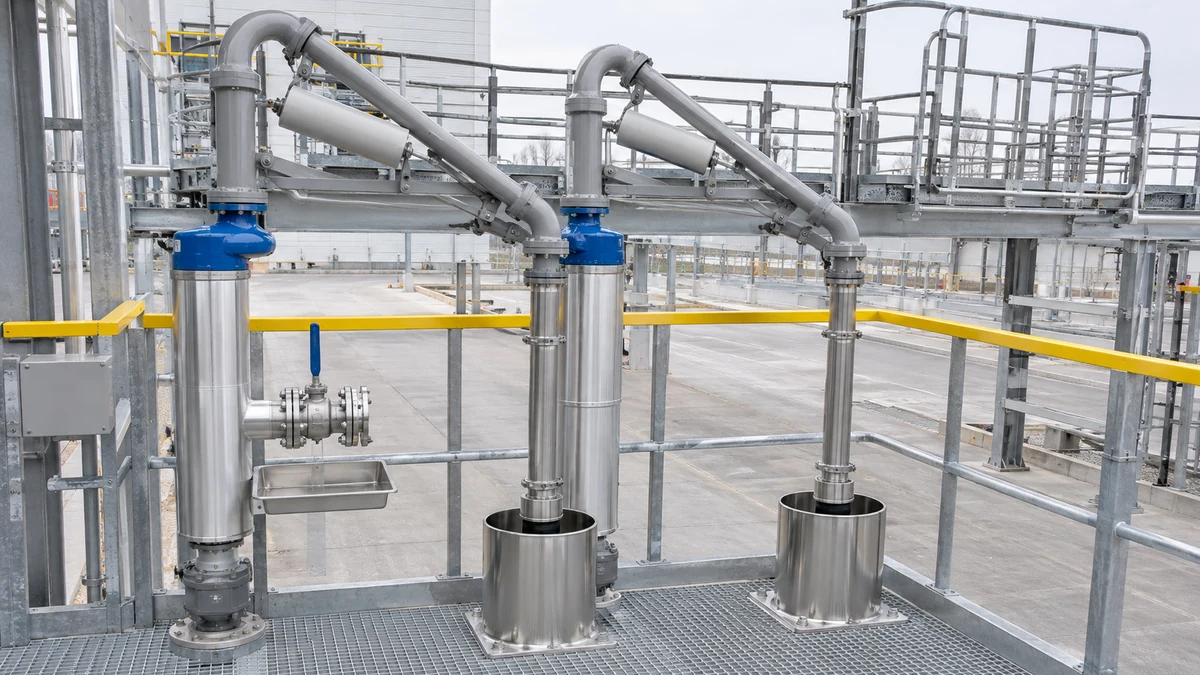
Solids and tank-bottom sludge: a straining strategy
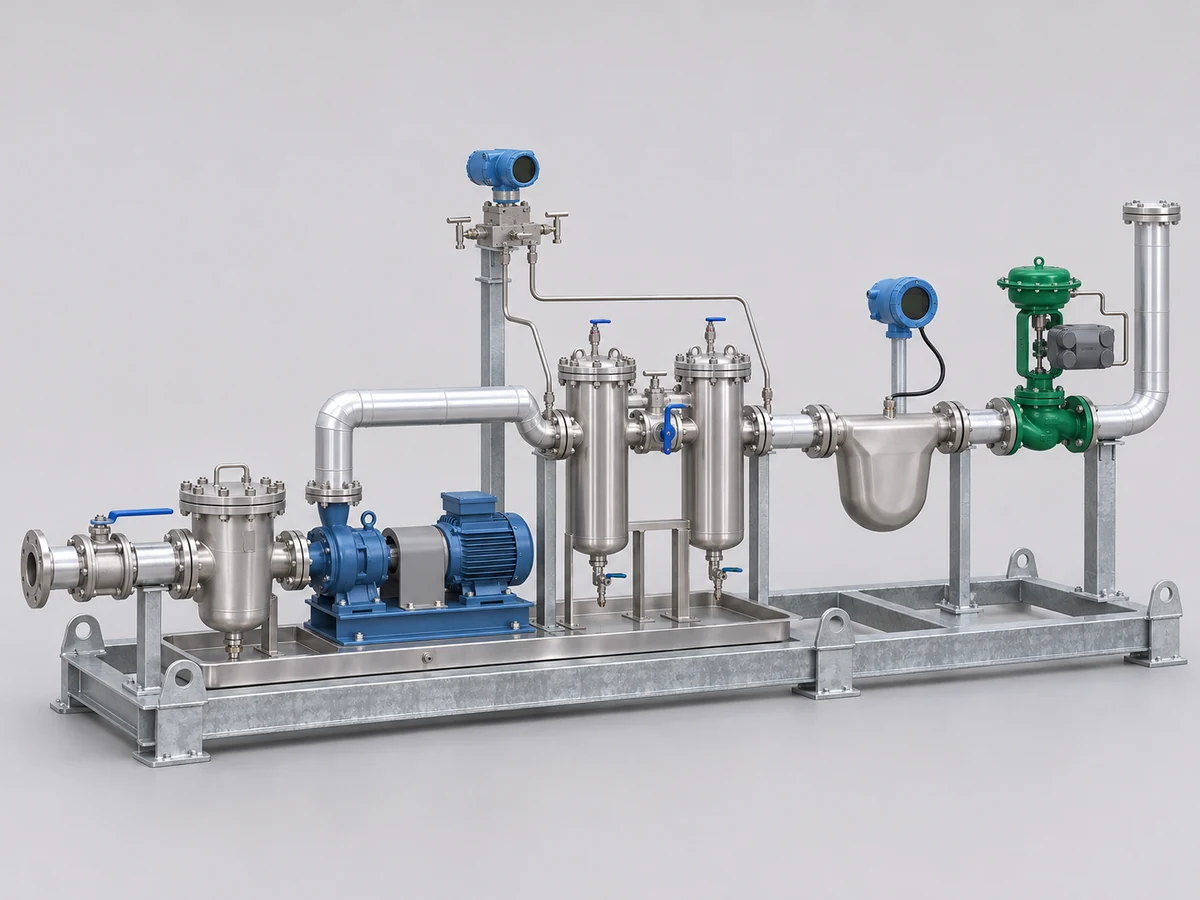
Solids in pyrolysis oil can agglomerate into a sludge layer during storage and erode pumps and nozzles. VTT's report on fast pyrolysis bio-oils states that the handling chain must be designed so it does not block or fill up with particles, and that pumping needs suitable filtration. On a loading line this translates into a tank outlet positioned above the sludge layer, a basket strainer at pump suction with a separate stage for fine solids, differential pressure monitoring across each strainer, and a duplex arrangement so elements can be cleaned without stopping loading. Mesh size follows the particle distribution and the sensitivity of the pump and meter; over-fine filtration only adds pressure drop and cleaning frequency on a viscous product.
Phase separation and product uniformity
Biomass pyrolysis oils are usually treated as single-phase liquids, yet depending on feedstock and process a lighter top phase can separate, and because aging produces water, an aqueous phase may split out once total water exceeds about 30 wt%. If product is drawn from different tank levels during loading, compartments on the same truck can end up with different quality. Tank mixing, the draw-off elevation and a pre-loading sampling routine belong to the loading system design, not only to operations.
Heating is decided by analysis, not by habit
The heavy fuel oil practice of keeping the whole tank hot should not be copied to pyrolysis oil. Biomass pyrolysis oil ages faster as temperature rises, and heated to 100 °C or more it reacts rapidly and eventually leaves a solid residue. Whether the loading line is heated at all, and within what temperature window, is settled by reading the viscosity curve together with a thermal stability test. Heating methods, the upper temperature limit and trace heating details are covered on the heated transfer systems page for pyrolysis oil.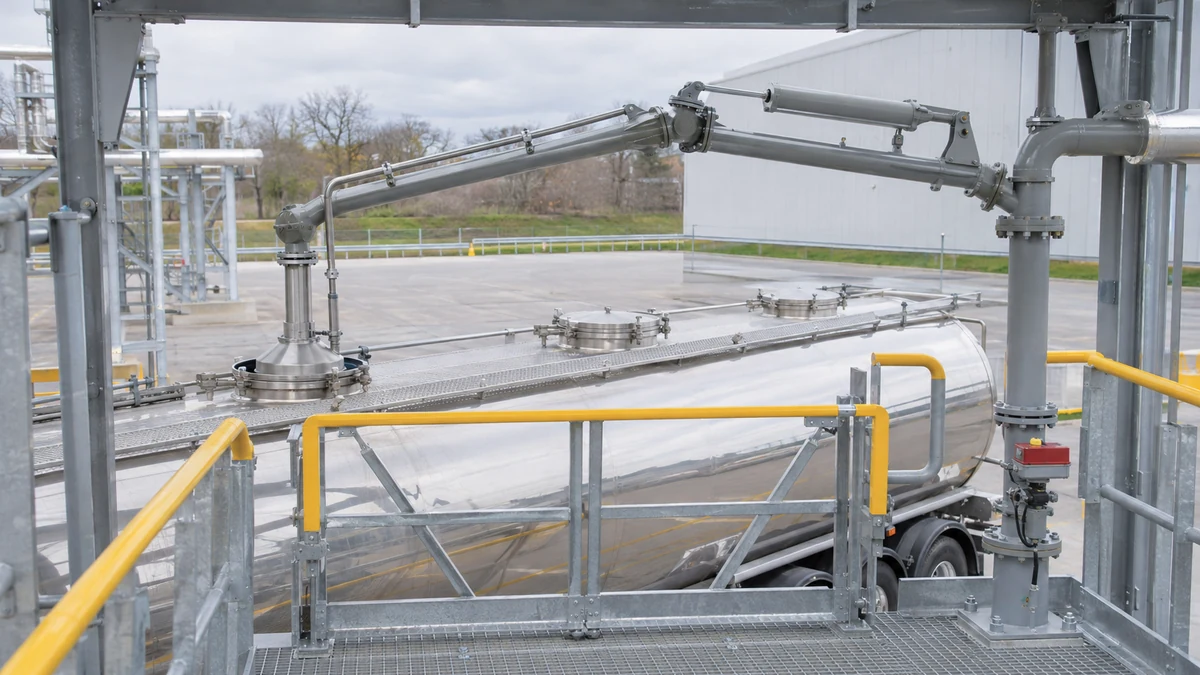
Odor, vapor and operator exposure
Biomass pyrolysis oil has an acrid, smoky odor from low-molecular aldehydes and acids that can irritate the eyes, and its flash point is reported over a wide range because water makes the measurement difficult. Both points shape the loading method: rather than open-hatch top loading, closed-connection loading with displaced vapor routed to a suitable treatment or recovery point is usually evaluated. Since the product can irritate skin and eyes, drip collection at disconnection points, draining the hose or arm before uncoupling and PPE requirements are defined at the design stage.
Wetted parts and seal materials
Total acid numbers of 90–100 are common in biomass pyrolysis oils, and acids combined with water are the main driver of corrosion, which worsens at higher temperature. VTT reports stainless steels such as 304L and 316L and many plastics including PTFE, HDPE and PP as suitable, while mild steel, aluminum and nickel are listed as unsuitable. Pumps, meters, valve trims, loading arm swivels and gaskets should each be reviewed against this. The same list must not be assumed for tire or plastic oils; for those, materials are chosen from product analysis and equipment manufacturers' compatibility data.
Key selection parameters on a pyrolysis oil loading line
Parameter | Why it matters in design | Effect on selection |
Viscosity range | Pump suction, pressure drop and loading rate depend directly on it | Sets pump type, line size and heating requirement |
Solids and sediment | Strainer plugging, pump and meter wear | Outlet elevation, filtration stages, differential pressure monitoring |
Phase uniformity | Quality differences between compartments of one truck | Tank mixing, draw-off level, pre-loading sample |
Acidity | Corrosion of wetted parts and seals | Stainless or higher alloys, seal material verified for the product |
Volatiles and odor | Operator exposure and neighbor complaints | Closed-connection loading, vapor collection, drip control |
Truck fleet | Residue from previous cargo and tank lining material | Dedicated trucks or checking cleaning certificates |
On the truck side: dedicated fleet and cleaning
Biomass pyrolysis oil does not mix with petroleum oils. Diesel or fuel oil left from a previous load can remain as a separate phase and spoil the cargo, so working with trucks dedicated to this product, or checking a cleaning document on every load, is advisable. Tank lining and gasket materials on the truck also need to suit the product, and the loading facility design should define from the start which truck types and connection standards it will serve.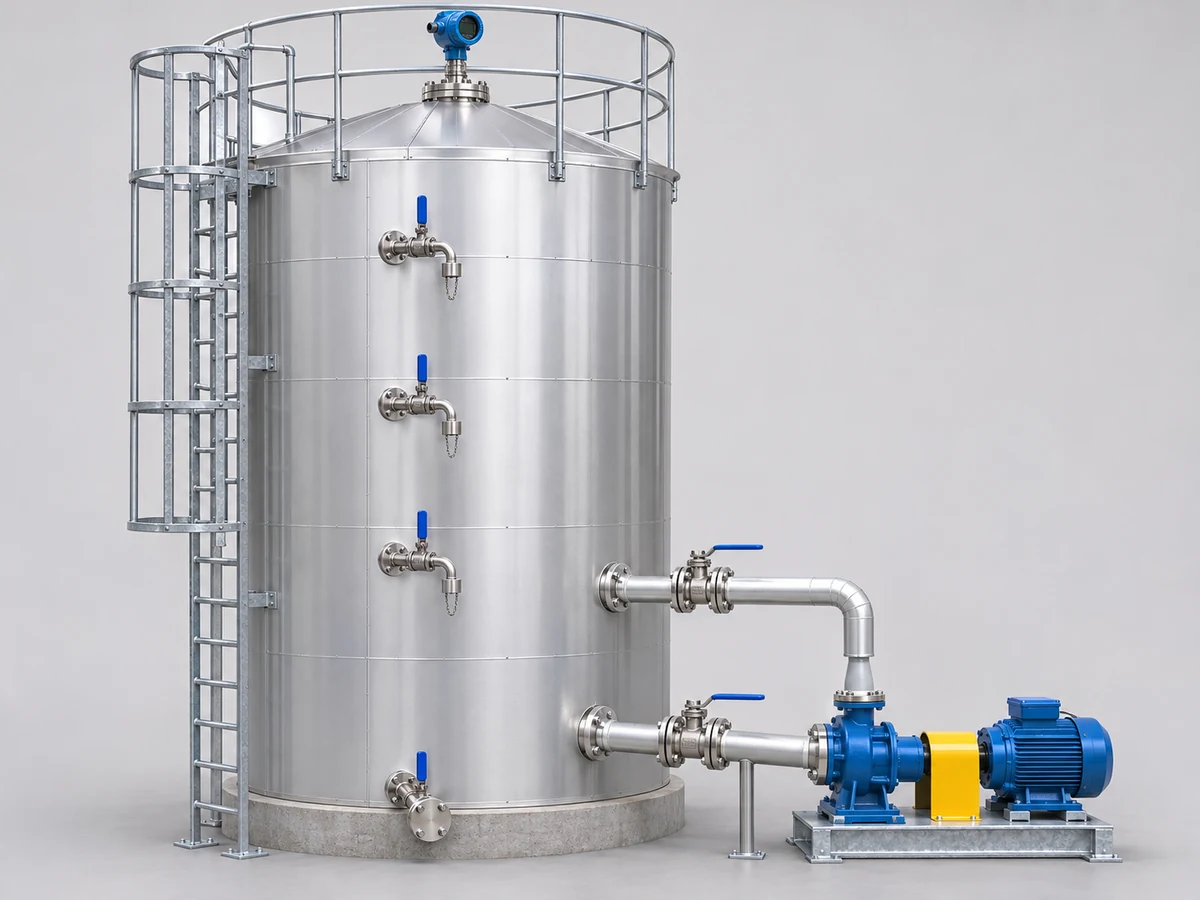
Where TLY Energy fits in
Depending on project scope, TLY Energy provides engineering support that starts from the product analysis: selection of measurement and control technology, supply of pumps, valves and metering equipment, integration of the loading point, site installation, testing and commissioning. PLC-based permissive logic and data logging can also be included. Scope of supply and responsibility for material decisions are agreed at project start on the basis of the technical specification and product data.
What to send us before we size a loading line
· Oil origin (tire, plastic, biomass or mixed) and a short description of the production process
· Lab analyses from several batches: viscosity versus temperature, water, solids, acidity, density, flash point
· Storage tank arrangement, agitator if any, and outlet location
· Target loading rate, trucks per day and compartment layout
· Whether the truck fleet is dedicated and which connection type it uses
· Hazardous area classification and any local requirements on vapor or odor
· Invoicing basis: mass, volume or weighbridge
Related pages
· Heated transfer systems for pyrolysis oil: How heating needs are set against the product's thermal stability limit.
· Pyrolysis oil metering skids: Choosing meter technology for a product of variable composition.
· Truck loading systems: General process flow and components of a loading point.
· Pyrolysis oil facilities: How pyrolysis oil properties vary with source, and the solution groups.
Pyrolysis oil loading: common questions
Can one typical data set be used to design a pyrolysis oil loading line?
It should not be. Properties change with feedstock, process and storage time, and tire, plastic and biomass oils differ markedly. Published typical values give an indication only for biomass fast pyrolysis oil. The design should rest on analyses from several batches and on the worst credible case among them.
Why do truck compartments sometimes end up with different quality?
Solids can settle in the storage tank and the oil can separate into phases. If loading starts without mixing the tank or controlling the draw-off level, the first and last portions may differ, and so will the compartments filled from them. Mixing before loading, a suitable outlet elevation and representative sampling reduce the risk.
Can pyrolysis oil be hauled in trucks used for heavy fuel oil?
It may be technically possible, but biomass pyrolysis oil does not mix with petroleum oils, so residue from a previous cargo forms a separate phase and can spoil the load. The tank lining and gaskets must also withstand an acidic product. A dedicated fleet, or checking a cleaning document on every load, is therefore recommended.
How can odor during loading be reduced?
The sharp odor of biomass pyrolysis oil comes from volatile aldehydes and acids. The main measures are closed-connection loading instead of open-hatch filling, collecting displaced vapor and routing it to a suitable treatment point, and draining the hose or arm before disconnection. The final solution depends on local environmental requirements.
How is the line cleaned after loading?
Fresh biomass pyrolysis oil dissolves largely in low-molecular alcohols such as methanol or ethanol, so these solvents can be used for flushing. The solvent must not attack pump seals or flange gaskets, though. Deposits that have thickened over a long standstill may need a different method, chosen according to the product and the materials involved.