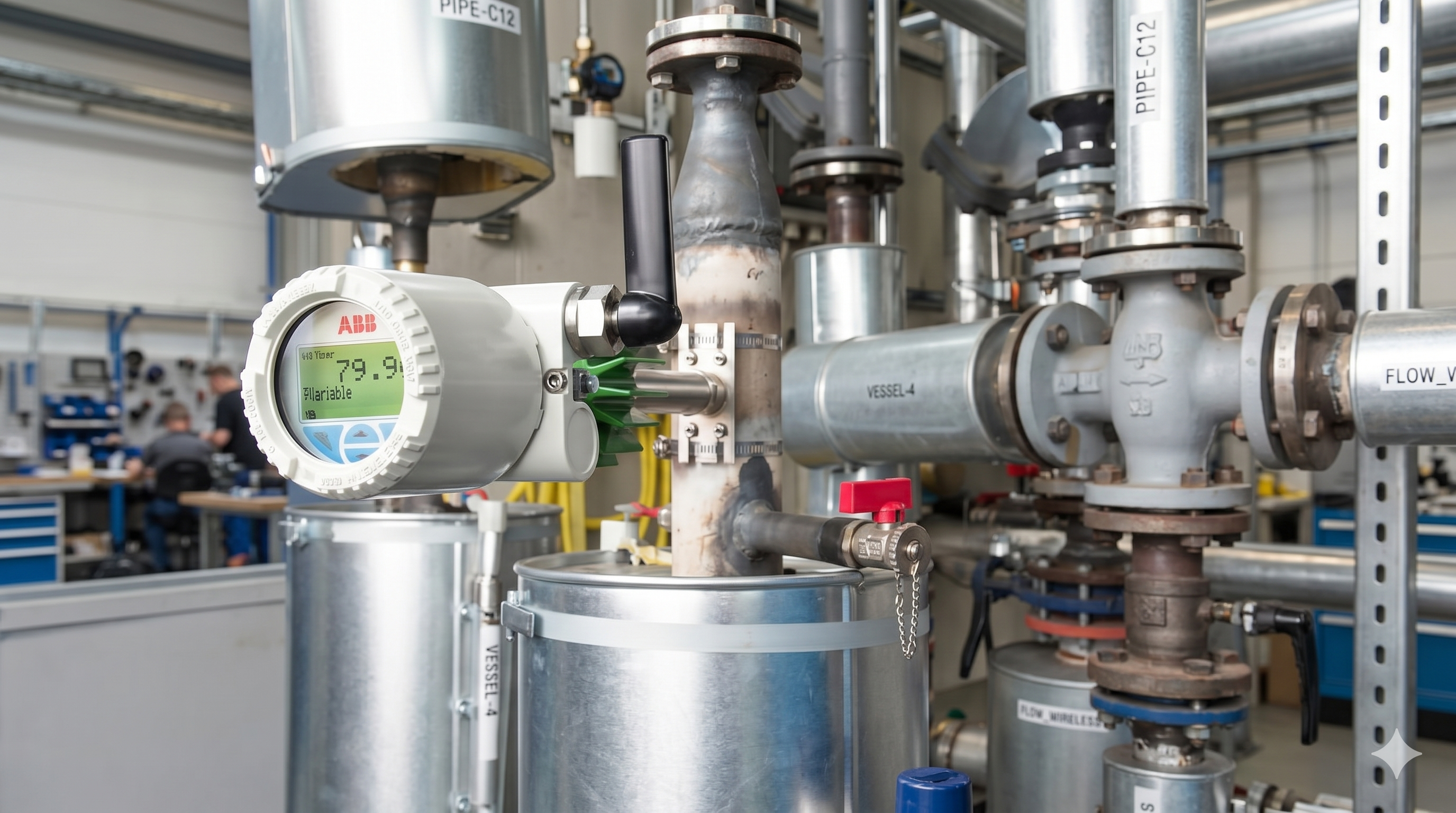
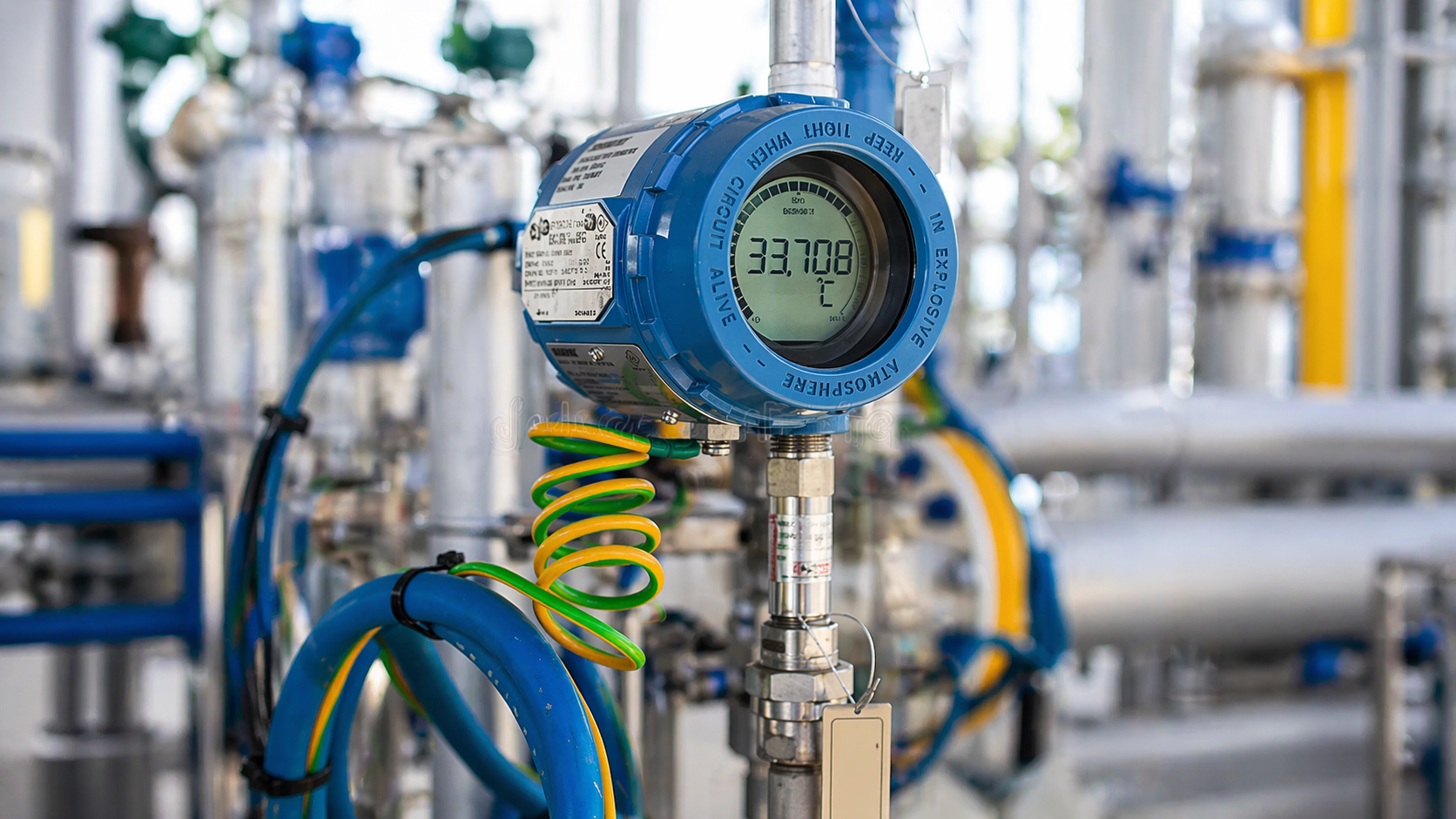
TEMPERATURE MEASUREMENT
Transmitters, sensors, and thermowells are the fundamental components of industrial process temperature measurement systems. These components work together to provide accurate and reliable temperature measurements, ensuring the safety and efficiency of industrial processes. Below is an overview of each of these components:
Temperature Transmitters
Temperature transmitters are electronic devices that convert measurement signals received from temperature sensors into a 4–20 mA analog output or digital communication protocols such as HART and Modbus. In addition to signal conditioning and amplification functions, they play an important role in reliably transmitting temperature data to control systems, data loggers, and other monitoring devices.
Temperature transmitters help improve measurement accuracy and system reliability by reducing signal interference and noise. Advanced temperature transmitters offer additional features such as diagnostics, automatic calibration, and digital communication, providing reliable and efficient performance across a wide range of industrial applications.
Temperature Sensors
Temperature sensors are devices that directly measure the temperature of their surrounding environment or process and generate an electrical signal proportional to the measured temperature. The main types of temperature sensors commonly used in industry include:
Thermocouples: Thermocouples measure temperature based on the Seebeck effect. They are widely preferred for their broad temperature measurement ranges and durable construction.
Resistance Temperature Detectors (RTDs): RTDs operate based on the principle that the electrical resistance of metallic elements, particularly platinum, changes with temperature. They provide high accuracy and stability.
Thermistors: Thermistors are semiconductor sensors that offer high sensitivity to temperature changes. They are suitable for applications requiring precise measurements within limited temperature ranges.
Infrared (IR) Sensors: Infrared sensors measure temperature without contact by detecting infrared radiation emitted by objects. They are generally used in applications where direct contact is not required or possible.
Thermowells
Thermowells are protective housings or tubes designed to protect temperature sensors used in industrial processes. They perform various functions that help protect sensors under demanding operating conditions and support measurement continuity.
Protection: Thermowells protect temperature sensors against demanding process conditions such as high pressure, corrosive substances, and mechanical damage, helping to extend their service life.
Process Isolation: In applications where the sensor is installed in the process fluid, thermowells prevent direct contact between the sensor and the fluid, enabling safe and accurate temperature measurement.
Easy Replacement: In the event of sensor failure or maintenance requirements, thermowells allow the sensor to be easily removed and replaced without shutting down the process.
Heat Transfer: Thermowells are designed to optimize heat transfer from the process fluid to the sensor. This design supports accurate and reliable temperature measurement.