



WIND POWER PLANTS
We Are Here for Environmentally Responsible and Successful Energy!
Wind power plants are facilities that convert wind energy into electrical energy. Wind energy is converted into mechanical energy through wind turbines and then transformed into electrical energy with the help of generators. This process utilizes wind power, an environmentally friendly and renewable energy source, for electricity generation.
Wind power plants are generally built in windy regions because they operate more effectively with high and consistent wind speeds. These plants can vary in size and capacity and are typically installed on open land or offshore locations. Wind turbines generate mechanical energy through rotating blades that capture the kinetic energy of the wind. This rotational motion enables generators to produce electrical energy.
By reducing dependence on fossil fuels, wind power plants minimize environmental impact and provide a sustainable energy source. As one of the renewable energy sources, wind energy is becoming increasingly popular in power generation due to its clean and renewable nature.
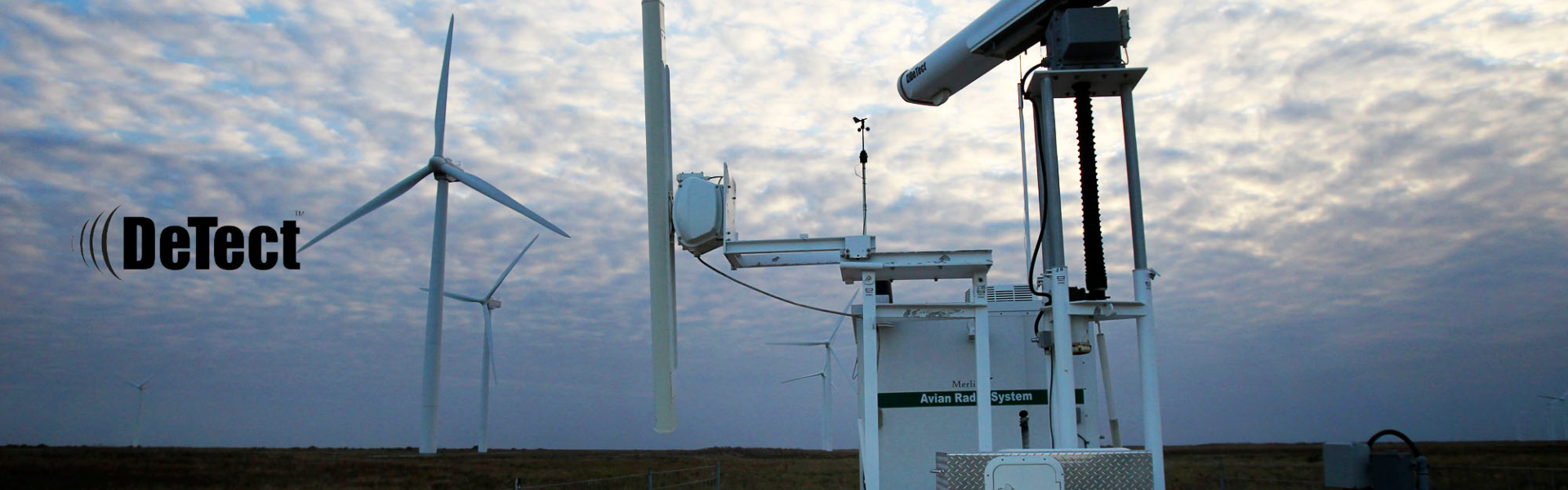
MERLIN™ WIND ENERGY BIRD MONITORING SYSTEMS (BMS) | BIRD MONITORING AND MITIGATION SYSTEMS (BMMS)
As TLY Enerji ve Savunma Sanayi Anonim Şirketi, we are pleased to provide detailed information about the Wind Energy Bird Monitoring Systems (BMS) | Bird Monitoring and Mitigation Systems (BMMS), one of the innovative products of the DETECT INC brand.
Wind energy is a sustainable and environmentally friendly energy source. However, birds around wind turbines may be exposed to potential risks. Wind Energy Bird Monitoring Systems (BMS) | Bird Monitoring and Mitigation Systems (BMMS) are radar-based systems developed to monitor, analyze, and reduce risks associated with bird activity in wind energy areas.
These systems are equipped with highly sensitive radar sensors and advanced data analysis algorithms. By detecting birds around wind turbines, they identify potential collision risks and help you take preventive measures.
The advantages offered by Wind Energy Bird Monitoring Systems (BMS) | Bird Monitoring and Mitigation Systems (BMMS) include:
Bird Detection and Monitoring: Radar sensors detect birds around wind turbines and monitor their movements. This enables continuous tracking of bird activity.
Risk Assessment: The system analyzes bird activity to identify potential risk zones. This helps you implement preventive measures and reduce collision risks.
Automatic Guidance: When birds approach designated risk areas, the system can automatically adjust turbine speed or orientation. This minimizes bird collision risks while maintaining wind energy production.
Data Analysis and Reporting: Radar systems analyze collected data and generate detailed reports. This provides valuable insights into bird activity and helps optimize future planning.
Wind Energy Bird Monitoring Systems (BMS) | Bird Monitoring and Mitigation Systems (BMMS) are ideal solutions for reducing bird collisions and minimizing environmental impacts at wind farms.
As TLY Enerji ve Savunma Sanayi Anonim Şirketi, we are proud to offer DETECT INC’s Wind Energy Bird Monitoring Systems (BMS) | Bird Monitoring and Mitigation Systems (BMMS). For more information, please visit our website or contact us.
DeTect’s advanced bird monitoring systems and related services supporting wind energy include:
NEXRAD radar data pre-screening site assessment
Onshore and offshore bird and bat radar systems
Bat detection and tracking radars
Bird radar data processing, analysis, and reporting
Bird and bat mortality risk assessment
Radar-based mortality risk mitigation systems
MERLIN™ Bird and Bat Radar Technologies
DeTect is the developer and manufacturer of the MERLIN Avian Radar System, the most advanced and proven bird and bat monitoring system available for wind farm bird observation, risk assessment, monitoring, and real-time risk mitigation, with more than 250 systems delivered worldwide.
MERLIN technology was originally developed for the U.S. Air Force and NASA as a precision bird detection radar system that provides real-time information to controllers, pilots, and managers to reduce bird-aircraft collision risks.
MERLIN technology is highly automated, collecting high-quality 24/7 unattended data on bird activity within a 5–8 mile radius around proposed wind farm sites. This data can be used to develop detailed pre-construction mortality risk projections and operational mitigation strategies.
With the MERLIN SCADA bird and bat mortality risk mitigation feature, the MERLIN system can function as an “early warning” system by detecting bird and bat activities that may pose mortality risks at operating wind farms and automatically initiating mitigation actions, including idling turbines until the risk has passed.
DeTect provides wind farm owners, developers, operators, and consultants with complete operational and technical support, including system deployment, operation, user training, data processing, analysis, reporting, and QA/QC services.
Its team includes highly experienced radar ornithologists, bird biologists, engineers, and statisticians who specialize in the design, development, and operation of bird and wildlife detection systems, aviation safety, and environmental management, forming one of the world’s leading teams in the remote sensing of birds and bats.
MERLIN™ Advanced Bird Monitoring System
MERLIN provides the most cost-effective, scientifically sound, and comprehensive method for collecting high-quality, statistically superior data on bird and bat movements at proposed wind turbine project locations for both onshore and offshore wind turbine installations.
Originally developed for demanding aviation safety applications, MERLIN is the most advanced and proven technology available for bird and bat studies, with more than 40 systems operating at wind farms across the United States, Canada, the United Kingdom, Europe, Africa, and New Zealand.
The systems incorporate solid-state Doppler radar technology with proprietary bird-mode waveforms specifically developed for the detection and tracking of birds and bats. The systems also feature optional Frequency Diversity processing for enhanced detection in environments with heavy ground and sea clutter.
MERLIN continuously and automatically collects and analyzes data under various conditions using state-of-the-art radar and computer technologies specifically developed to detect and track the unique behavioral characteristics of birds and bats, generating highly accurate and detailed datasets for project decision-making and permitting processes.
Real-Time and Recorded Bird Activity
MERLIN processes radar signals in real time with high update rates of 1–2 seconds, providing project biologists and wind farm operators with live displays of bird activity locations, flight paths, altitudes, sizes, and other information.
Multiple users can simultaneously view information displays and remotely control the system via LAN, satellite, and WWAN (cellular) data connections.
All system operating settings are accessible through password-protected on-screen Graphical User Interfaces (GUIs), and changes can be made in real time while the system is operating.
All system functions, including system shutdown and cold restart, can be remotely controlled.
MERLIN is fully automated for 24/7 unattended operation and includes an integrated Health and Safety Monitoring (HSM) system that continuously performs diagnostics and provides audible, visual, text message, and email alerts in the event of power loss or component failures.
Data is automatically archived into the integrated MERLIN SQL server database, providing a permanent record for each project and supporting detailed analysis, modeling, and quantitative mortality risk assessments.
MERLIN SQL includes a built-in Data Reporter featuring a wide range of standard wind energy information and analyses, including passage rates, rotor sweep zone percentages, and flight patterns.
MERLIN Reporter includes two unique routines—MERLIN TrackPlot and MERLINChart—that automate user activity analysis by area and time period.
The system also supports custom user-developed queries and analyses within GIS and other third-party software applications.
The data storage system has the capacity to retain 24/7 data for several years and can be easily expanded through the addition of commercially available, low-cost plug-and-play hard drives.
Advantages of MERLIN™ Technology
The MERLIN system is the most advanced technology available for wind energy projects and offers significant advantages over traditional visual and manual radar ornithology bird survey techniques.
Advantages include:
Larger data sets
Extremely accurate passage rates
All data recorded in the SQL system
Detailed altitude and count data for the rotor sweep zone
Identifies flight patterns throughout the wind resource area
Quantitative determination of mortality risk
Highly defensible, statistically reliable data
Supports real-time, automated mortality risk mitigation
The MERLIN Bird Monitoring System is the most powerful tool available for evaluating proposed wind energy projects and generates high-quality, detailed datasets that can be used to accurately determine the number of birds and bats passing through rotor-swept areas at a proposed project site during daytime, nighttime, and low-visibility conditions.
DeTect’s proprietary Data Reports program generates detailed datasets in both tabular and graphical formats that measure the number of birds passing through the rotor sweep area, enabling precise calculation and assessment of bird and bat mortality risk.
MERLIN SCADA Bird and Bat Mortality Risk Mitigation Systems
For wind farm operations, DeTect’s MERLIN SCADA (Supervisory Control and Data Acquisition) functionality enables the MERLIN system to operate as a real-time bird and bat monitoring and risk mitigation system. Combined with a MERLIN Bird Radar System and other sensor data inputs, including weather and visibility information, MERLIN SCADA software provides real-time radar-based curtailment or deterrence to prevent bird fatalities while maximizing energy production.
DeTect’s MERLIN SCADA is the only bird and bat mortality risk technology proven in operational use at wind farms for the protection of migratory birds, resident birds, raptors, and bats.
MERLIN SCADA provides wind farm managers and operators with advance “early warning” notifications of approaching migratory or individual birds and bats under mortality risk conditions and implements responses either manually or automatically, including turbine idling.
The system can operate autonomously under all weather and visibility conditions. When risk conditions are detected by the MERLIN system, it can automatically idle individual turbines, groups of turbines, or all turbines, apply pre-programmed “risk rule sets,” and restart turbines when the risk has subsided.
MERLIN SCADA operational software is fully compatible with all wind farm turbines and SCADA systems, and DeTect provides complete development, integration, implementation, and operational support, including the development of real-time remote operator interface displays.
Due to DeTect’s contribution to environmentally sustainable design engineering, MERLIN SCADA received the Green Dot Award in 2008. MERLIN SCADA has been used since 2009 for migratory bird fallout risk reduction (SCADA-M) and since 2010 for raptor risk mitigation (SCADA-R), utilizing DeTect’s Turbine-Centered model to automatically idle individual turbines when a raptor approaches a turbine.
DeTect’s bird and bat radar systems are available as fully mobile, skid-mounted, standalone systems with integrated control cabins and power systems and include all hardware and software required for bird and bat tracking, clutter suppression, and data recording. Custom configurations are also available, including fully remote-controlled offshore installations incorporating additional sensors such as thermal cameras, bat detectors, insect detectors, and vertical profilers.
Systems are available from DeTect through short-term rental, long-term leasing, lease-to-own, or direct purchase options, with or without DeTect operators. DeTect provides complete technical support from survey execution to data analysis, along with comprehensive parts and labor warranties.
Case Study:
U.S. Fish and Wildlife Service (FWS) Great Lakes Radar Study
The U.S. Fish and Wildlife Service (FWS) has collected MERLIN Bird Radar System data for the Great Lakes Region over multiple years using two MERLIN units acquired in 2010 to support environmental protection and wind energy development throughout the region.
Beginning in 2010, FWS studied bird and bat activity using bird radar and acoustic bat monitoring systems to accelerate conservation, restoration, and development efforts.
By utilizing the MERLIN Avian Radar system, FWS was able to develop comprehensive data on where birds and bats migrate, at what altitudes they travel, and under which environmental conditions migration occurs.
Download the latest technical data sheets from:
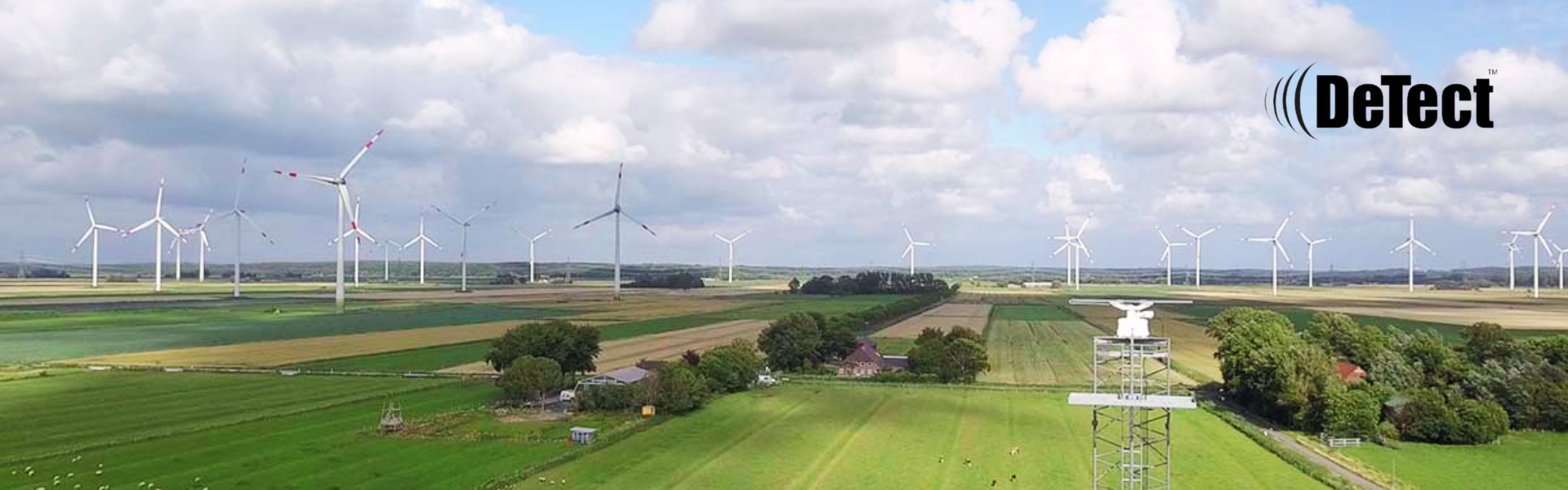 HARRIER™ AIRCRAFT DETECTION LIGHTING SYSTEMS (ADLS)
As TLY Enerji ve Savunma Sanayi Anonim Şirketi, we are pleased to provide detailed information about Aircraft Detection Lighting Systems (ADLS), one of the pioneering products of the DETECT INC brand.
Aircraft Detection Lighting Systems (ADLS) are specially designed lighting systems developed to enhance air traffic safety. These systems enable the detection and visual identification of aircraft at airports and other flight operation locations.
ADLS consists of high-intensity light sources programmed with specific lighting patterns. The system highlights aircraft positions and provides visual reference points for other aircraft, pilots, and air traffic control units.
The advantages offered by Aircraft Detection Lighting Systems (ADLS) include:
Aircraft Detection: The system detects aircraft in areas with dense air traffic and highlights their positions. This enhances flight safety and minimizes collision risks.
Visibility in Night and Adverse Weather Conditions: ADLS improves aircraft visibility during nighttime and low-visibility conditions, enabling pilots and air traffic control units to operate more safely.
Warning and Guidance: The system provides automatic warnings and guidance when specific aircraft approach designated areas. This ensures that other flights and air traffic control units are informed and can take the necessary precautions.
Energy Efficiency: ADLS is designed with energy-efficient light sources and automated lighting controls. This optimizes energy consumption and contributes to environmental sustainability.
Aircraft Detection Lighting Systems (ADLS) are an ideal solution for improving safety and flight operations at airports, heliports, military bases, and other areas with high air traffic activity.
As TLY Enerji ve Savunma Sanayi Anonim Şirketi, we are proud to offer DETECT INC’s Aircraft Detection Lighting Systems (ADLS). For more information, please visit our website or contact us.
HARRIER ADLS provides reliable, continuous 360-degree radar surveillance of the airspace surrounding wind farms, communication towers, power lines, and other installations requiring obstruction lighting from ground level up to aircraft operating altitudes. The system automatically activates obstruction lighting when an aircraft is detected within a defined outer perimeter.
HARRIER is the most capable technology currently available and meets or exceeds all regulatory requirements, including the latest U.S. Federal Aviation Administration (FAA) Advisory Circulars, Canadian NAV CANADA requirements, and various European Union standards. The FAA Performance Evaluation Report states that the HARRIER ADLS system complies with the performance requirements defined in Chapter 14 of FAA Advisory Circular AC 70/7460-1M and is published on the FAA website.
The HARRIER ADLS visual warning system is also compatible with all wind energy turbines, control and communication networks, and obstruction lighting systems.
The HARRIER ADLS collision avoidance system is based on DeTect’s proven HARRIER ASR technology used for non-cooperative aircraft detection and UAV detect-and-avoid applications. The system provides aircraft detection at ranges of up to 20+ miles with continuous monitoring and lighting signal activation through SCADA or direct interfaces.
HARRIER ADLS is highly customizable for each site and application, supporting multiple warning zones and activation perimeters. It is available as a standalone system or integrated with other sensors and warning devices such as audible alert systems. Typical national standards (FAA AC 70/7460-1M and Transport Canada) require a minimum range of 3–4 miles, while HARRIER exceeds the expected minimum range by more than 400%, providing a substantial safety margin. In addition, HARRIER’s speed measurement and heading tracking capabilities exceed regulatory requirements for detection and activation.
HARRIER ADLS also continuously records operational data—including aircraft detections and flight paths, lighting activation events, and system information—into an integrated SQL Data System, with customizable automated reporting capabilities for record keeping and compliance documentation.
With DeTect’s MERLIN processor add-on, a HARRIER ADLS can additionally provide ADLS, bird radar, and drone surveillance functionality from a common sensor platform.
Advantages of HARRIER ADLS include:
Long-range capability providing greater safety margins
Compatible with all turbines, communication networks, and lighting systems
Low acquisition, operation, and maintenance costs
State-of-the-art solid-state technology
High-MTBF Doppler solid-state radar technology
Lower installation costs through ground-based sensor packages
Multi-functional capability for bird and intruder detection
Supported by a full parts and labor warranty
The HARRIER Aircraft Detection Lighting System is the most widely deployed and proven ADLS solution on the market, with installed and operational systems across the United States, Canada, and Europe.
Download the latest technical data sheets from: