LITRE METER
Flow Measurement and Flow Meter Engineering
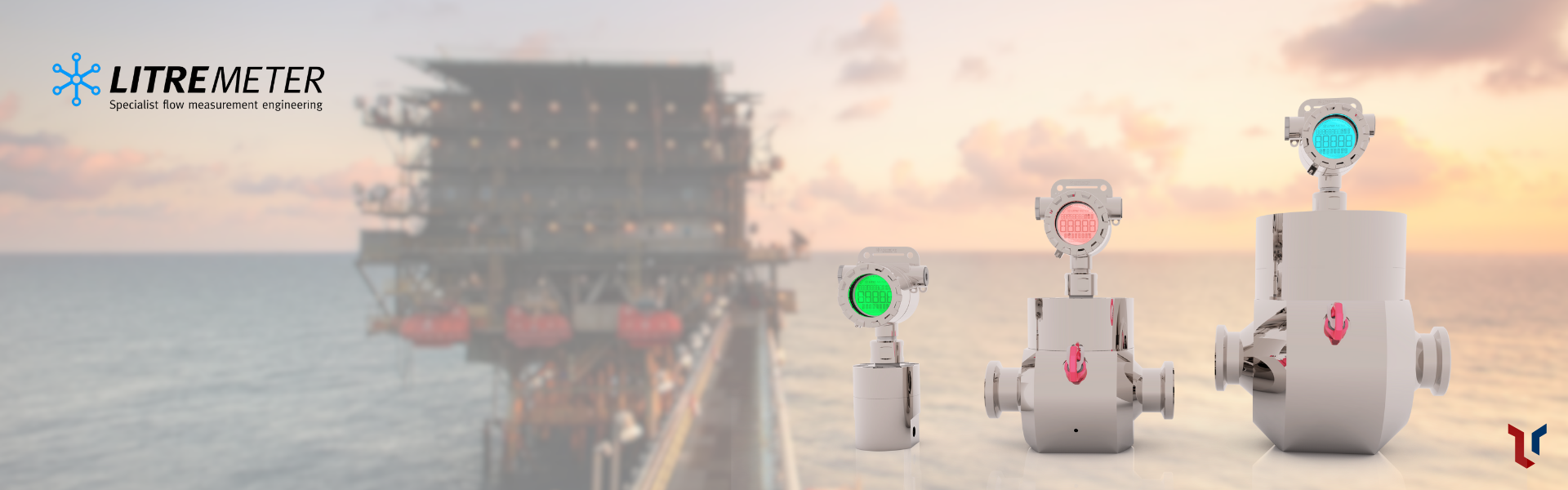
Litre Meter has been designing and manufacturing flow measurement solutions for approximately 50 years. Our VFF flow meters are designed to withstand the highest pressures and the lowest flow rates and are developed to perform reliably across a wide range of applications and viscosity conditions. Originally designed for the oil and gas sector, our flow meters provide versatile solutions for various industries, including subsea, hydraulics, water, and renewable energy.
VFF (Visual Equipment)
Since 1985, we have been supplying businesses worldwide with a wide range of durable positive displacement flow meters manufactured in accordance with industry standards.
Over the past forty years, we have developed an extensive product portfolio ranging from our standard flow meter series, popular in the United Kingdom, the EU, and the United States, to custom and configurable flow meter solutions that can be adapted to virtually any flow application. Our portfolio covers different flow ranges and application requirements. Further information about our standard flow meters is available here.
The VFF series is ideal for applications involving low flow rates and high-pressure conditions, including chemical injection, hydraulic, and subsea applications.
What is a VFF Flow Meter?
In the VFF, the rotor is essentially a disc with a circular groove on its underside, capable of holding and carrying fluid from the chamber inlet to the outlet. A certain amount of liquid is also transported through the gap formed between the outer wall of the rotor and the chamber wall.
A central “pin” underneath the rotor is constrained to move within a circular groove in the body. A connecting element (or plate) in the body engages with a slot in the rotor, converting rotary motion into oscillating motion as the fluid passes through. This oscillation divides the liquid into positive-displacement measuring pockets.
The upper section of the rotor is equipped with a powerful magnet positioned directly above the lower “pin.” As the rotor moves in a circular path, this magnet activates and deactivates the reed switch sensor located in the upper cover.
Pressure Balanced Chamber (PBC)
This structure contains the rotor and the chamber in which the rotor rotates. It is a separate component that can be removed for inspection and calibration. An additional advantage is that it enables pressure-independent measurement.
Key Benefits
Prevents chamber deformation at higher pressures.
Eliminates pressure-related measurement errors.
Allows the most suitable materials to be selected for compatibility between the chamber and rotor.
PVD-coated stainless steel.
Enables selection of the most suitable material for the pressure-containing chamber; for example, super duplex stainless steel can be used.
Enables the manufacture of a duplex-bodied flow meter; duplex material is not suitable for the tolerances required during machining.
All VFF flow meters are individually calibrated according to the minimum and maximum flow conditions specified by the customer and the operating viscosity. The minimum achievable flow rates depend on the viscosity of the liquid.
Typical VFF Applications
♦ Chemical Injection
♦ Hydraulics
♦ Wax Dispersant
♦ Corrosion Inhibitor
♦ Subsea Control Fluid
♦ PIB
♦ Scale Inhibitor
♦ Subsea Flow
♦ Asphaltene Dispersant
♦ Pour Point Depressant
♦ Emulsifier
Feature | Value / Description |
|---|
Accuracy | Reading accuracy ±1%; verification required |
Pressure Rating | Depends on the connection size and pressure rating |
Temperature Rating | Depending on the material and instrument: -40°C to +100°C; with FlowPod, up to +75°C in Hazardous Areas |
Viscosity Range | 0.5 to 100,000 cP or higher |